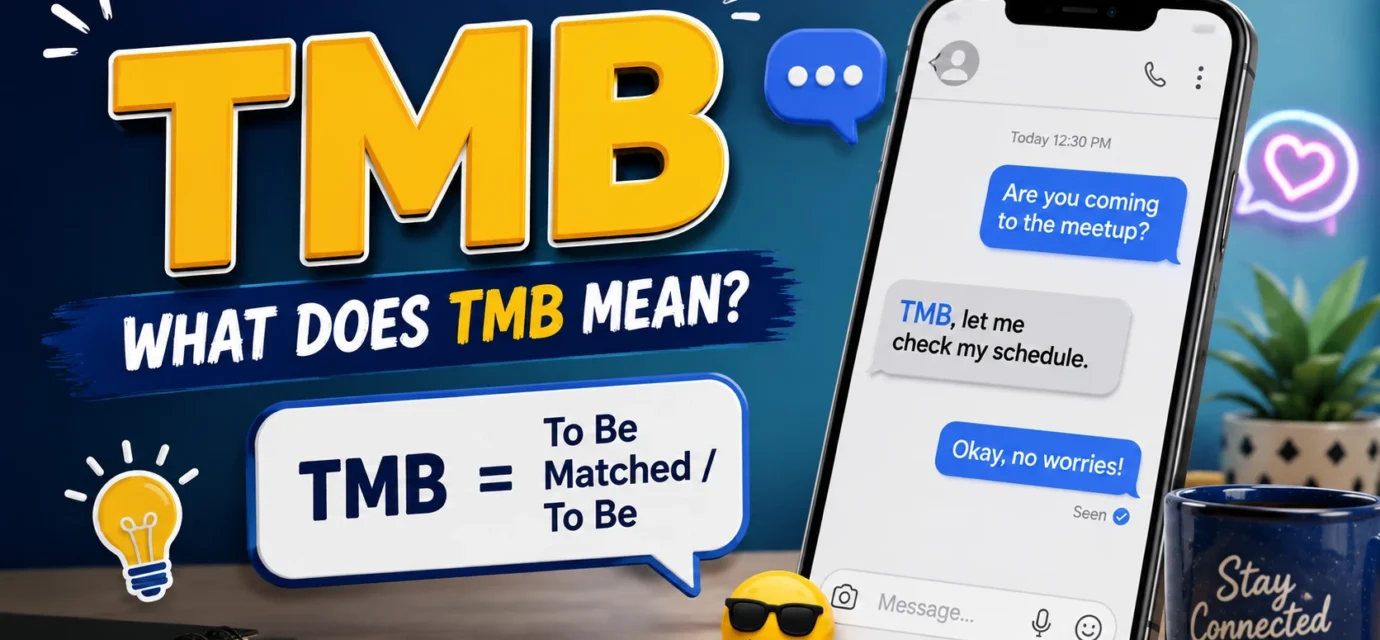

If you have seen “TMB” in a text message, Instagram DM, Snapchat chat, TikTok comment, or WhatsApp conversation, you may wonder what does tmb mean?
In texting, TMB commonly means “Text Me Back.” It is a quick way to ask someone to reply after they receive a message.
For example:
“I need to talk to you. TMB when you’re free.”
This means:
“I need to talk to you. Text me back when you’re free.”
TMB is usually casual and direct. Friends, family members, classmates, and partners may use it when they want a response.
The abbreviation can also have other meanings in different contexts, so the surrounding conversation matters.
TMB – Quick Meaning
What Does TMB Stand For?
TMB = Text Me Back
It is commonly used when someone wants another person to respond by text.
It can communicate:
- A request for a reply
- A reminder to respond
- A desire to continue a conversation
- Mild urgency
- Casual communication
Examples of TMB in Text
“When you see this, TMB.”
Meaning: “When you see this, text me back.”
“TMB when you get home ❤️”
This sounds caring and friendly.
“Hey, TMB ASAP.”
This suggests that the sender wants a quick response.
Origin & Background
TMB developed alongside the growth of SMS and instant messaging.
As mobile communication became faster, people began shortening common phrases to save time and typing.
Abbreviations such as BRB, TTYL, LOL, IDK, WYD, and TMB became part of casual digital communication.
The phrase “text me back” is particularly suited to abbreviation because it is frequently used in everyday messaging.
Social Media Influence
TMB can appear on:
- Snapchat
- Facebook Messenger
- TikTok
- SMS
- Group chats
Although many people now simply write “text me back,” TMB remains understandable in informal conversations.
How the Meaning Evolved
TMB is usually straightforward.
The emotional tone can change depending on punctuation and the surrounding message.
“TMB 😊”
sounds friendly.
“TMB!!!”
may communicate urgency.
“TMB.”
can sound more serious or demanding.
Real-Life Conversations
WhatsApp Conversation
Person A:
“Are we still meeting tonight?”
Person B:
“I’m not sure yet.”
Person A:
“Okay, TMB when you know.”
Here, TMB means “text me back.”
Instagram DM
Person A:
“I found the dress you were looking for!”
Person B:
“No way! Send me the link.”
Person A:
“I’m busy right now. TMB later?”
The sender is asking the other person to continue the conversation later.
TikTok Comment
Person A:
“Check your DMs!”
Person B:
“Okay 😂”
Person A:
“TMB when you see it.”
This means “text me back when you see it.”
Text Message
Person A:
“I have something important to tell you.”
Person B:
“What happened?”
Person A:
“Can’t explain here. TMB when you’re alone.”
Here, the sender wants a private conversation.
Emotional & Psychological Meaning
TMB is simple, but the way it is used can communicate different emotions.
Wanting Attention
Someone may use TMB because they want to continue talking.
“TMB when you’re free.”
This shows they are interested in hearing from you.
Concern
TMB can also be used when someone wants to make sure another person is okay.
“Let me know when you get home. TMB ❤️”
The request feels caring rather than demanding.
Urgency
When combined with words such as “ASAP,” TMB can signal that a response is important.
“TMB ASAP.”
Maintaining Connection
In everyday relationships, TMB keeps conversations active even when people cannot respond immediately.
A Real-Life Communication Scenario
Imagine you send your friend a message while they are at work.
You know they cannot reply immediately, so you write:
“No rush. TMB when you’re free 😊”
This makes the request feel relaxed rather than demanding.
Usage in Different Contexts
Social Media
TMB may be used in DMs when someone wants another person to respond.
Friends and Relationships
Friends often use TMB casually.
“TMB when you get home.”
Partners may also use it when they want to continue a personal conversation.
“Miss you. TMB when you’re free ❤️”
Work and Professional Settings
TMB is generally too informal for formal workplace communication.
Instead, write:
“Please message me when you are available.”
or:
“Please get back to me when you have a chance.”
Casual vs. Serious Tone
“TMB 😊” sounds friendly.
“TMB ASAP.” sounds urgent.
“TMB.” may feel more serious.
“Please text me back when you have time.” sounds clearer and more polite.
When NOT to Use TMB
Formal Emails
Avoid TMB in formal emails and official correspondence.
Academic Communication
Use complete language in assignments, academic emails, and formal school communication.
Professional Messages
If your workplace is formal, write the complete request instead.
Sensitive Conversations
If the subject is serious or emotional, a complete sentence may prevent misunderstandings.
When You Need an Immediate Response
If something is genuinely urgent, TMB alone may not communicate the seriousness clearly.
State exactly what you need and when you need it.
Common Misunderstandings
TMB Usually Means Text Me Back
This is the most common texting interpretation.
TMB Is Not the Same as TTYL
TMB asks someone to respond.
TTYL means “Talk To You Later” and usually signals that the sender is ending the conversation temporarily.
TMB Does Not Always Mean “Reply Immediately”
The abbreviation itself does not necessarily indicate urgency.
The surrounding words determine how quickly the person expects a response.
Punctuation Can Affect Tone
Compare:
“TMB 😊”
with:
“TMB NOW.”
The first sounds friendly. The second sounds urgent.
TMB vs. Similar Slang
| Expression | Meaning | Typical Tone |
|---|---|---|
| TMB | Text Me Back | Casual |
| TM | Text Me | Casual |
| TXT ME | Text Me | Casual |
| HMU | Hit Me Up | Casual |
| LMK | Let Me Know | Casual |
| BRB | Be Right Back | Casual |
| TTYL | Talk To You Later | Friendly |
| WYD | What You Doing? | Casual |
Key Insight
TMB means “Text Me Back” and is mainly used as a casual request for someone to reply. Its tone can range from friendly to urgent depending on the surrounding message.
Variations and Types
1. TMB
The standard abbreviation for “Text Me Back.”
2. tmb
The lowercase version is common in casual texting.
3. TMB ASAP
Requests a response as soon as possible.
4. TMB Later
Tells someone to respond at a later time.
5. TMB When Free
Makes the request less demanding.
6. TMB When You Get Home
Often used as a caring reminder.
7. TMB Please
Adds politeness to the request.
8. TMB ❤️
Adds warmth or affection.
9. TMB!!!
The repeated exclamation marks can make the message sound urgent or excited.
10. TMB When You Can
A relaxed way of asking someone to respond when they have time.
How to Respond When Someone Uses TMB
Your response depends on the situation.
Casual Replies
“Sure, I will!”
“Okay, TMB later.”
“Got you!”
Funny Replies
“My phone is in witness protection 😂”
“I saw it! I’m replying now 😭”
Mature Replies
“Sure, I’ll message you when I’m available.”
“I’ll get back to you later.”
Respectful Replies
“Of course. I’ll text you when I have a moment.”
“Sure, I’ll respond as soon as I can.”
Regional & Cultural Usage
Western Culture
TMB is recognizable in casual English-language texting, particularly among people familiar with traditional SMS abbreviations.
Asian Culture
English texting abbreviations are commonly used by younger internet users across many Asian countries.
TMB may appear alongside local-language messages.
Middle Eastern Culture
English-speaking social media users may also use TMB in informal conversations.
Its basic meaning remains “Text Me Back.”
Global Internet Usage
Digital communication has made abbreviations such as TMB understandable across many countries.
Not every user will recognize it immediately, though.
Gen Z vs. Millennials
Millennials may recognize TMB from the earlier SMS and instant-messaging era.
Gen Z users may understand it but often prefer shorter phrases such as “text me,” “reply,” or “lmk.”
Is TMB Safe for Kids?
Yes. TMB is generally harmless texting slang.
It simply means “Text Me Back.”
There is nothing inherently offensive or inappropriate about the abbreviation.
As with any online abbreviation, children should still consider who they are communicating with and what the surrounding conversation means.
FAQs
What does TMB mean in texting?
TMB usually means “Text Me Back.” It is used to ask someone to reply to a text message.
What does TMB mean on Snapchat?
On Snapchat, TMB generally means “Text Me Back.” Someone may use it when they want you to respond later.
What does TMB mean on Instagram?
On Instagram, TMB can mean “Text Me Back,” especially in casual DMs and conversations.
Is TMB rude?
No. TMB is not inherently rude. However, messages such as “TMB NOW” can sound demanding because of the wording and capitalization.
What is the difference between TMB and TTYL?
TMB means “Text Me Back,” while TTYL means “Talk To You Later.” TMB requests a response, whereas TTYL usually ends a conversation temporarily.
What should I reply to TMB?
You can reply with “Sure,” “Okay, I’ll text you later,” or “I’ll message you when I’m free.”
Is TMB still used?
Yes. TMB can still appear in casual texting and social media, although many people now simply write “text me back.”
Conclusion
So, what does TMB mean?
TMB most commonly means “Text Me Back.”
It is a short and convenient texting abbreviation used when someone wants another person to respond.
You may see it in WhatsApp messages, Instagram DMs, Snapchat chats, TikTok conversations, and ordinary text messages.
The tone depends on the context. “TMB 😊” can feel friendly, while “TMB ASAP” can communicate urgency.
If you receive a message saying:
“TMB when you’re free.”
the person is simply asking you to message them when you have time.
TMB is perfectly natural for casual conversations. In professional or formal communication, however, writing “Please text me back when you are available” is clearer and more appropriate.