
Have you ever received a message saying “WDYM?” and wondered what the person was asking? With the rapid growth of online conversations, texting abbreviations have become a normal part of everyday communication. Short forms like WDYM help people type faster, but they can also confuse people who are unfamiliar with internet slang.
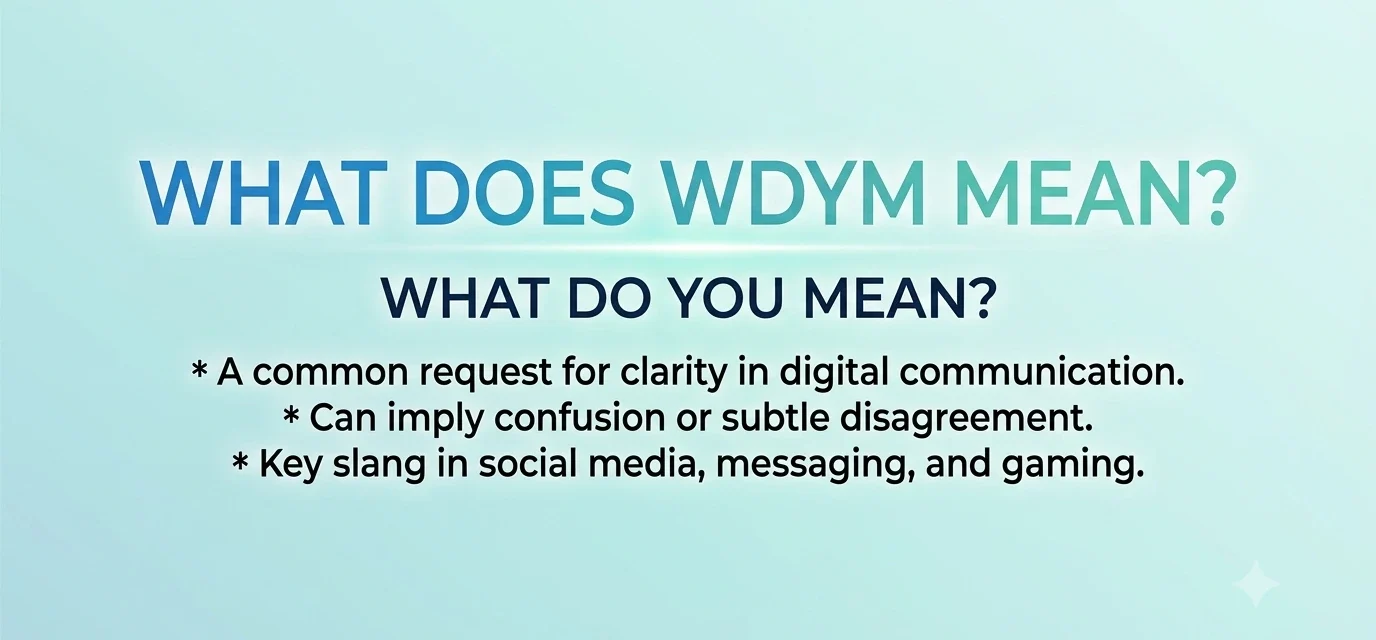
The abbreviation WDYM most commonly means “What Do You Mean?” It is used when someone wants clarification, does not understand something, or wants another person to explain their message.
For example:
Person A:
“I think this movie changed everything.”
Person B:
“WDYM?”
Here, the person is asking, “What do you mean?”
WDYM is widely used on platforms such as WhatsApp, Snapchat, Instagram, TikTok, Discord, Facebook Messenger, and text messages. It can express genuine curiosity, confusion, surprise, or sometimes even disagreement depending on the tone of the conversation.
This complete guide explains what WDYM means in texting, its origin, emotional meaning, real-life examples, proper usage, misunderstandings, and how to respond naturally.
WDYM Meaning – Quick Definition
What Does WDYM Mean in Text?
The most common meaning of WDYM is:
WDYM = What Do You Mean?
It is a shortened version of a common question used when someone wants more explanation.
It can mean:
- Can you explain that?
- What are you trying to say?
- I don’t understand.
- Why do you say that?
- Can you give more details?
Quick Examples
“WDYM you are leaving?”
“WDYM that’s impossible?”
“WDYM by that comment?”
“WDYM? I thought everything was fine.”
In each example, WDYM asks the other person to clarify their message.
Quick Facts
- Full Form: What Do You Mean?
- Tone: Curious, confused, surprised, or questioning
- Used On: WhatsApp, Snapchat, Instagram, TikTok, Discord, SMS
- Common Among: Gen Z, Millennials, online communities
Different Meanings of WDYM Based on Context
Although “What Do You Mean?” is the standard meaning, the emotion behind WDYM depends on the conversation.
WDYM as a Genuine Question
Sometimes people use WDYM because they honestly need clarification.
Example:
Person A:
The meeting was moved forward.
Person B:
WDYM?
Here, the person simply wants more information.
WDYM as Surprise
People often use WDYM when something unexpected happens.
Example:
Friend A:
I’m moving to another country next month.
Friend B:
WDYM? When did this happen?
The abbreviation shows shock or surprise.
WDYM as Confusion
When a message seems unclear, WDYM helps ask for an explanation.
Example:
“You already know what happened.”
“WDYM?”
The person wants to understand what the speaker is referring to.
WDYM as Disagreement
Sometimes WDYM can sound slightly challenging.
Example:
Person A:
That was the easiest exam ever.
Person B:
WDYM? It was really difficult.
Here, WDYM shows disagreement rather than simple confusion.
Origin & Background
Where Did WDYM Come From?
WDYM developed from the larger trend of internet and texting abbreviations. As mobile phones became the main way people communicated, users started shortening common phrases to save time.
Instead of typing:
“What do you mean?”
people shortened it to:
“WDYM”
This followed the same pattern as other popular abbreviations:
- LOL – Laugh Out Loud
- BTW – By The Way
- OMG – Oh My God
- IDK – I Don’t Know
- TBH – To Be Honest
Growth Through Social Media
Social media platforms made WDYM more popular because online conversations happen quickly.
People often use short messages while:
- Replying to comments
- Chatting with friends
- Reacting to videos
- Discussing trends
- Joining online communities
Why WDYM Became Popular
The abbreviation works well because it is short but still clear.
Typing:
“WDYM?”
is much faster than:
“What do you mean by that?”
especially during fast conversations.
WDYM on Different Platforms
WDYM on WhatsApp
On WhatsApp, WDYM is commonly used in personal conversations.
Example:
Person A:
I don’t think I can come tomorrow.
Person B:
WDYM?
The second person wants to understand the reason.
WDYM on Snapchat
Snapchat conversations are usually quick, so abbreviations like WDYM are very common.
Example:
“WDYM you deleted the picture?”
It allows users to react instantly.
WDYM on Instagram
Instagram users often use WDYM in comments and direct messages.
Example:
Comment:
“WDYM this song is old?”
The person is asking for clarification or expressing surprise.
WDYM on TikTok
TikTok comments frequently use WDYM when reacting to videos.
Examples:
“WDYM this happened years ago?”
“WDYM everyone knows this trend?”
It often shows disbelief or surprise.
Real-Life Conversations
WhatsApp Chat
Person A:
I can’t believe today happened.
Person B:
WDYM? What happened?
Person A:
My application finally got approved.
Instagram DM
Person A:
This place changed completely.
Person B:
WDYM?
Person A:
They renovated the whole building.
TikTok Comments
Person A:
WDYM this movie is underrated?
Person B:
Exactly! More people should watch it.
Text Message
Person A:
I have some bad news.
Person B:
WDYM? Are you okay?
Emotional & Psychological Meaning
Showing Curiosity
WDYM often shows that someone wants to understand another person’s thoughts better.
It encourages explanation and deeper conversation.
Showing Surprise
Many people use WDYM when they receive unexpected information.
Example:
“You won the competition.”
“WDYM?!”
The abbreviation shows excitement and disbelief.
Creating Conversation
Instead of ending a conversation, WDYM keeps it going.
A person using WDYM is often inviting the other person to explain more.
Showing Concern
Sometimes WDYM appears when someone is worried.
Example:
“I don’t feel the same anymore.”
“WDYM? Are you okay?”
Here, it shows emotional concern.
Personal-Style Scenario
Imagine a friend suddenly messages:
“I need to tell you something important.”
You reply:
“WDYM?”
Those four letters show curiosity, concern, and a desire to understand what is happening. This is why WDYM has become such a common part of digital communication.
Usage in Different Contexts
The meaning of PYO depends on the conversation and the relationship between the people communicating. While it most commonly means “Put You On,” the way it is used can vary across social media platforms, friendships, workplaces, and everyday conversations.
Social Media
PYO is especially popular on platforms where people frequently recommend products, music, videos, restaurants, and trends.
For example, a TikTok creator might post:
“PYO to the best budget headphones.”
This tells viewers that the creator is introducing them to a product they believe is worth trying.
On Instagram, someone may share:
“My cousin PYO to this hidden beach.”
The phrase lets followers know that the location was recommended by someone else.
Friends and Relationships
Among friends, PYO is commonly used when sharing something exciting or useful.
Examples:
- “Let me PYO to this new coffee shop.”
- “I’ll PYO to my favorite study playlist.”
- “My sister PYO to this skincare brand.”
Using PYO creates a friendly tone because it shows the speaker wants to help someone discover something valuable.
Music and Entertainment
One of the most popular uses of PYO is in music culture.
People often recommend:
- New songs
- Albums
- Artists
- Podcasts
- Movies
- TV series
Example:
“If nobody has PYO to this artist yet, you’re missing out.”
The phrase encourages others to explore something they may not know about.
Education and Learning
Students also use PYO when recommending educational resources.
Examples:
- “Can someone PYO to a good math channel?”
- “My teacher PYO to this free learning website.”
- “My friend PYO to a useful exam preparation app.”
Here, PYO means introducing someone to helpful learning tools.
Work and Professional Settings
PYO can also appear in informal workplace conversations.
Example:
“My manager PYO to a networking event.”
or
“A colleague PYO to this productivity tool.”
However, in formal business writing, it is usually better to use complete phrases such as:
- Recommend
- Introduce
- Suggest
Instead of writing:
“I’ll PYO to this software.”
A professional version would be:
“I’d like to recommend this software.”
When NOT to Use PYO
Although PYO is widely understood among younger internet users, there are situations where it may not be appropriate.
Formal Emails
Avoid using internet slang in professional emails.
Instead of:
“I’ll PYO to this report.”
Write:
“I’d like to recommend this report.”
Academic Writing
Research papers, essays, and school assignments should always use complete language.
Instead of writing PYO, use words like:
- Recommend
- Introduce
- Suggest
Talking to People Unfamiliar With Slang
Older family members or people who rarely use social media may not understand what PYO means.
Using full sentences helps avoid confusion.
Official Presentations
Business presentations and public speeches should avoid internet abbreviations unless the audience already understands them.
Professional language creates a stronger impression.
Common Misunderstandings
Thinking PYO Means Only One Thing
Although Put You On is the most common meaning, PYO can also stand for Pick Your Own in farming, tourism, and local businesses.
Always consider the topic before deciding what it means.
Confusing PYO With Promotion
Some people assume PYO always means advertising.
In reality, PYO usually refers to a genuine recommendation rather than paid promotion.
A friend saying:
“Let me PYO to this café.”
is simply sharing a personal suggestion.
Assuming It Is Always About Products
PYO can refer to almost anything valuable, including:
- Music
- Books
- Jobs
- Scholarships
- Podcasts
- Websites
- Restaurants
- Opportunities
Believing Everyone Understands It
Although PYO is growing in popularity, many people outside social media communities may never have seen it before.
Using the full phrase is often clearer when speaking with a broader audience.
Comparison Table
| Expression | Meaning | Common Use |
|---|---|---|
| PYO | Put You On | Recommend or introduce something |
| FYI | For Your Information | Share useful information |
| IMO | In My Opinion | Express a personal opinion |
| TBH | To Be Honest | Give an honest opinion |
| PSA | Public Service Announcement | Share important information |
| GOAT | Greatest of All Time | Praise someone or something |
| FYP | For You Page | TikTok recommendation feed |
| DM | Direct Message | Private conversation |
| IRL | In Real Life | Offline experiences |
| ICYMI | In Case You Missed It | Share something others may have missed |
Key Insight
Unlike abbreviations such as FYI or IMO, which focus on sharing information or opinions, PYO is centered on introducing someone to something valuable. It often reflects trust, generosity, and the desire to help others discover useful resources or enjoyable experiences.
Variations and Related Expressions
1. Put You On
The complete phrase behind PYO.
Example:
“Let me put you on this new artist.”
2. Recommend
A formal alternative suitable for professional situations.
3. Suggest
A polite way to introduce an idea or resource.
4. Check This Out
A casual invitation to look at something interesting.
5. You Should Try
A common phrase used when recommending products or experiences.
6. Put Me On
A request asking someone to recommend something.
Example:
“Can you put me on to a good podcast?”
7. Plug Me In
A slang expression asking someone to connect you with an opportunity or useful contact.
8. Hook Me Up
Often used when asking someone to recommend or provide access to something.
9. Show Me
A simple alternative that asks someone to introduce you to something new.
10. Introduce Me To
A complete phrase commonly used in professional and everyday conversations.
How to Respond When Someone Uses PYO
Your response depends on the recommendation being shared.
Casual Replies
- Thanks for putting me on!
- I’ll check it out.
- That looks interesting.
- Appreciate the recommendation.
Excited Replies
- This is exactly what I needed!
- You’re the best!
- Can’t wait to try it.
- Adding it to my list right now.
Funny Replies
- Why didn’t you PYO sooner? 😂
- You’re influencing me again!
- My wallet won’t forgive you. 😄
- Looks like I’m staying up all night watching this.
Respectful Replies
- Thank you for sharing this.
- I appreciate the recommendation.
- I’ll definitely give it a try.
- Thanks for thinking of me.
Regional & Cultural Usage
Western Culture
PYO is commonly used among younger generations, particularly in online communities focused on music, fashion, entertainment, and social media.
Asian Culture
English internet slang continues to grow in popularity among students and young professionals. PYO is mostly seen in online discussions rather than everyday speech.
Middle Eastern Culture
Among English-speaking social media users, PYO is becoming more familiar, especially through TikTok, Instagram, and YouTube.
Global Internet Usage
As social media connects users from around the world, expressions like PYO spread quickly across different cultures.
Although its popularity continues to grow, it remains more common among younger internet users.
Gen Z vs Millennials
Gen Z
Frequently uses PYO while sharing:
- Songs
- Fashion
- Apps
- Lifestyle tips
- Travel recommendations
Millennials
May understand the phrase but often prefer saying “recommend” or “introduce” in everyday conversations.
Is PYO Safe for Kids?
Yes. PYO is generally safe for children because it usually means “Put You On,” or introducing someone to something helpful or enjoyable.
Children may come across PYO while watching videos, reading comments, or chatting with friends online.
Parents should still encourage children to think critically about recommendations they receive online. Just because someone recommends a product, app, or website doesn’t always mean it’s trustworthy or suitable.
Teaching children to verify information and seek guidance before trying unfamiliar content is a good digital safety habit.
Frequently Asked Questions
What does PYO mean in texting?
In texting, PYO most commonly means “Put You On,” which means introducing or recommending something valuable to another person.
What does PYO mean on TikTok?
On TikTok, PYO is often used when creators recommend songs, products, books, restaurants, or other creators worth checking out.
Is PYO the same as recommending something?
Yes. In most conversations, PYO simply means introducing someone to something you think they’ll enjoy or benefit from.
What does PYO mean in music slang?
In music culture, PYO usually means recommending a song, album, or artist that someone may not have discovered yet.
Can PYO have other meanings?
Yes. Although “Put You On” is the most common meaning online, PYO can also mean “Pick Your Own” in farming and tourism contexts.
Should I use PYO in professional emails?
No. Professional communication should use complete words like recommend, introduce, or suggest instead of internet slang.
Why has PYO become so popular?
PYO reflects modern internet culture, where people enjoy sharing helpful recommendations, hidden gems, and useful resources with others in a quick and casual way.
Conclusion
PYO is one of the newest internet abbreviations that has become increasingly popular across TikTok, Instagram, Snapchat, WhatsApp, and other social media platforms. In most conversations, it stands for “Put You On,” meaning to introduce someone to something useful, entertaining, or valuable.
Whether you’re recommending a favorite song, a hidden restaurant, a study app, or a new opportunity, PYO is a quick way to let others know you’re sharing something worth exploring. As with any internet slang, context is important because PYO can have other meanings in specific industries or communities.
Now that you understand what PYO means, you’ll be able to recognize it in conversations, use it naturally when appropriate, and confidently respond when someone says they’re going to “PYO” to something great.
Meta Title
What Does PYO Mean? Texting, TikTok & Social Media Explained
Meta Description
Learn what PYO means in texting, TikTok, Snapchat, Instagram, and social media. Discover its meaning, examples, usage, replies, and common slang interpretations.
Meta Keywords
what does pyo mean, pyo meaning, pyo meaning in text, what does pyo mean in texting, pyo slang meaning, put you on meaning, pyo on TikTok, pyo on Snapchat, internet slang PYO, social media abbreviations
Today 5:36 PM
next keyword what does wdym mean
I will continue with the same format: 2 parts, 2,000–2,500 words, no separator lines, SEO-optimized article, natural headings only.
What Does WDYM Mean? Complete Guide to Its Meaning in Text, Snapchat, TikTok & Social Media
Introduction
Have you ever received a message saying “WDYM?” and wondered what the person was asking? With the rapid growth of online conversations, texting abbreviations have become a normal part of everyday communication. Short forms like WDYM help people type faster, but they can also confuse people who are unfamiliar with internet slang.
The abbreviation WDYM most commonly means “What Do You Mean?” It is used when someone wants clarification, does not understand something, or wants another person to explain their message.
For example:
Person A:
“I think this movie changed everything.”
Person B:
“WDYM?”
Here, the person is asking, “What do you mean?”
WDYM is widely used on platforms such as WhatsApp, Snapchat, Instagram, TikTok, Discord, Facebook Messenger, and text messages. It can express genuine curiosity, confusion, surprise, or sometimes even disagreement depending on the tone of the conversation.
This complete guide explains what WDYM means in texting, its origin, emotional meaning, real-life examples, proper usage, misunderstandings, and how to respond naturally.
WDYM Meaning – Quick Definition
What Does WDYM Mean in Text?
The most common meaning of WDYM is:
WDYM = What Do You Mean?
It is a shortened version of a common question used when someone wants more explanation.
It can mean:
- Can you explain that?
- What are you trying to say?
- I don’t understand.
- Why do you say that?
- Can you give more details?
Quick Examples
“WDYM you are leaving?”
“WDYM that’s impossible?”
“WDYM by that comment?”
“WDYM? I thought everything was fine.”
In each example, WDYM asks the other person to clarify their message.
Quick Facts
- Full Form: What Do You Mean?
- Tone: Curious, confused, surprised, or questioning
- Used On: WhatsApp, Snapchat, Instagram, TikTok, Discord, SMS
- Common Among: Gen Z, Millennials, online communities
Different Meanings of WDYM Based on Context
Although “What Do You Mean?” is the standard meaning, the emotion behind WDYM depends on the conversation.
WDYM as a Genuine Question
Sometimes people use WDYM because they honestly need clarification.
Example:
Person A:
The meeting was moved forward.
Person B:
WDYM?
Here, the person simply wants more information.
WDYM as Surprise
People often use WDYM when something unexpected happens.
Example:
Friend A:
I’m moving to another country next month.
Friend B:
WDYM? When did this happen?
The abbreviation shows shock or surprise.
WDYM as Confusion
When a message seems unclear, WDYM helps ask for an explanation.
Example:
“You already know what happened.”
“WDYM?”
The person wants to understand what the speaker is referring to.
WDYM as Disagreement
Sometimes WDYM can sound slightly challenging.
Example:
Person A:
That was the easiest exam ever.
Person B:
WDYM? It was really difficult.
Here, WDYM shows disagreement rather than simple confusion.
Origin & Background
Where Did WDYM Come From?
WDYM developed from the larger trend of internet and texting abbreviations. As mobile phones became the main way people communicated, users started shortening common phrases to save time.
Instead of typing:
“What do you mean?”
people shortened it to:
“WDYM”
This followed the same pattern as other popular abbreviations:
- LOL – Laugh Out Loud
- BTW – By The Way
- OMG – Oh My God
- IDK – I Don’t Know
- TBH – To Be Honest
Growth Through Social Media
Social media platforms made WDYM more popular because online conversations happen quickly.
People often use short messages while:
- Replying to comments
- Chatting with friends
- Reacting to videos
- Discussing trends
- Joining online communities
Why WDYM Became Popular
The abbreviation works well because it is short but still clear.
Typing:
“WDYM?”
is much faster than:
“What do you mean by that?”
especially during fast conversations.
WDYM on Different Platforms
WDYM on WhatsApp
On WhatsApp, WDYM is commonly used in personal conversations.
Example:
Person A:
I don’t think I can come tomorrow.
Person B:
WDYM?
The second person wants to understand the reason.
WDYM on Snapchat
Snapchat conversations are usually quick, so abbreviations like WDYM are very common.
Example:
“WDYM you deleted the picture?”
It allows users to react instantly.
WDYM on Instagram
Instagram users often use WDYM in comments and direct messages.
Example:
Comment:
“WDYM this song is old?”
The person is asking for clarification or expressing surprise.
WDYM on TikTok
TikTok comments frequently use WDYM when reacting to videos.
Examples:
“WDYM this happened years ago?”
“WDYM everyone knows this trend?”
It often shows disbelief or surprise.
Real-Life Conversations
WhatsApp Chat
Person A:
I can’t believe today happened.
Person B:
WDYM? What happened?
Person A:
My application finally got approved.
Instagram DM
Person A:
This place changed completely.
Person B:
WDYM?
Person A:
They renovated the whole building.
TikTok Comments
Person A:
WDYM this movie is underrated?
Person B:
Exactly! More people should watch it.
Text Message
Person A:
I have some bad news.
Person B:
WDYM? Are you okay?
Emotional & Psychological Meaning
Showing Curiosity
WDYM often shows that someone wants to understand another person’s thoughts better.
It encourages explanation and deeper conversation.
Showing Surprise
Many people use WDYM when they receive unexpected information.
Example:
“You won the competition.”
“WDYM?!”
The abbreviation shows excitement and disbelief.
Creating Conversation
Instead of ending a conversation, WDYM keeps it going.
A person using WDYM is often inviting the other person to explain more.
Showing Concern
Sometimes WDYM appears when someone is worried.
Example:
“I don’t feel the same anymore.”
“WDYM? Are you okay?”
Here, it shows emotional concern.
Personal-Style Scenario
Imagine a friend suddenly messages:
“I need to tell you something important.”
You reply:
“WDYM?”
Those four letters show curiosity, concern, and a desire to understand what is happening. This is why WDYM has become such a common part of digital communication.
Usage in Different Contexts
The meaning of WDYM can slightly change depending on the situation, relationship, and tone of the conversation. While it usually means “What Do You Mean?”, it can express different emotions such as curiosity, confusion, surprise, or even disagreement.
Social Media Usage
On social media platforms like TikTok, Instagram, Snapchat, and Facebook, WDYM is commonly used when reacting to posts, comments, or messages.
Examples:
- “WDYM this video is from 2015?”
- “WDYM you never watched this movie?”
- “WDYM everyone knows this trend?”
In social media conversations, WDYM often shows surprise or disbelief rather than serious confusion.
Friends and Relationships
Among friends, WDYM is a natural way to ask for more details.
Example:
Friend A:
I think I made a huge mistake.
Friend B:
WDYM?
Here, the response shows concern and encourages the friend to explain.
In close relationships, WDYM can also help avoid misunderstandings.
Example:
Partner A:
Things feel different now.
Partner B:
WDYM? Let’s talk about it.
School and College Conversations
Students often use WDYM in group chats when discussing assignments, exams, or plans.
Examples:
- “WDYM the deadline changed?”
- “WDYM we have another test tomorrow?”
It allows students to quickly ask questions without writing complete sentences.
Gaming Communities
Gamers frequently use WDYM during online matches or chats.
Examples:
- “WDYM you lost the game?”
- “WDYM the server is down?”
Because gaming conversations move quickly, short forms like WDYM are convenient.
Work and Professional Settings
WDYM is generally considered too casual for formal workplace communication.
Instead of:
“WDYM by this report?”
A professional version would be:
“Could you please clarify this point?”
or:
“Could you explain what you mean?”
However, in informal workplace chats between colleagues, some people may use WDYM.
When NOT to Use WDYM
Although WDYM is common online, there are situations where it may not be appropriate.
Professional Emails
Avoid using WDYM in:
- Job applications
- Business emails
- Client communication
- Official reports
Professional communication should use complete sentences.
Instead of:
“WDYM?”
Write:
“Could you please clarify your point?”
Academic Writing
Text abbreviations should not be used in:
- Essays
- Research papers
- Assignments
- Presentations
Academic writing requires formal language.
With People Unfamiliar With Internet Slang
Older adults, new colleagues, or people from different communication backgrounds may not understand WDYM.
Using the full phrase avoids confusion.
During Serious Conversations
Although WDYM can show concern, it may sometimes sound impatient if used during emotional discussions.
Example:
Someone shares a personal problem.
Replying only:
“WDYM?”
may feel too short.
A better response:
“What do you mean? Is everything okay?”
Common Misunderstandings
Thinking WDYM Is Always Rude
Some people think WDYM sounds aggressive.
However, the tone depends on the situation.
Friendly:
“WDYM? That’s amazing!”
Rude:
“WDYM? Obviously.”
The words are the same, but the attitude changes.
Confusing WDYM With IDK
These abbreviations have opposite meanings.
WDYM
What Do You Mean?
(asking for explanation)
IDK
I Don’t Know
(showing lack of knowledge)
Assuming It Always Shows Confusion
WDYM can express:
- Surprise
- Excitement
- Curiosity
- Concern
- Disagreement
It is not always because someone is confused.
Forgetting Tone in Text Messages
Text messages do not include facial expressions or voice tone.
Adding emojis can change the feeling:
“WDYM? 😂”
sounds playful.
“WDYM.”
may sound serious.
Comparison Table
| Abbreviation | Full Meaning | Common Use |
|---|---|---|
| WDYM | What Do You Mean? | Asking for clarification |
| WYM | What You Mean? | Shorter version of WDYM |
| IDK | I Don’t Know | Showing uncertainty |
| IMO | In My Opinion | Sharing thoughts |
| TBH | To Be Honest | Giving an honest opinion |
| WYD | What You Doing? | Asking about activity |
| HBU | How About You? | Returning a question |
| FYI | For Your Information | Sharing information |
| BTW | By The Way | Adding information |
| NGL | Not Gonna Lie | Giving an honest statement |
Key Insight
WDYM is mainly used to continue conversations by requesting explanation. Unlike IDK, which shows uncertainty, WDYM shows that someone wants more information or a clearer understanding.
Variations and Related Expressions
1. WYM
A shorter version of “What You Mean?”
Example:
“WYM by that?”
2. What Do You Mean?
The complete formal version of WDYM.
3. What Are You Saying?
A casual alternative.
Example:
“What are you saying?”
4. Can You Explain?
A polite way to request clarification.
5. How Do You Mean?
A common expression in some English-speaking countries.
6. Clarify
A simple way to ask for more details.
7. Explain
A direct request for information.
8. Elaborate
A more formal way to ask someone to provide more details.
9. What Happened?
Used when asking about an unexpected situation.
10. Wait, What?
A casual expression showing surprise or confusion.
How to Respond When Someone Uses WDYM
Your response depends on why they asked.
Casual Replies
- I mean…
- Let me explain.
- What I meant was…
- Basically…
Funny Replies
- Exactly what I said 😂
- Long story short…
- Don’t make me explain everything 😄
- You know what I mean!
Mature Replies
- Let me clarify.
- I should explain that better.
- What I meant is…
- I’ll give more details.
Respectful Replies
- Sorry, I wasn’t clear.
- Let me explain what I meant.
- I hope this makes sense now.
Regional & Cultural Usage
Western Culture
WDYM is very common among younger people in countries where English internet slang is widely used.
It appears frequently in:
- Text messages
- Gaming chats
- Social media comments
Asian Culture
Many young internet users across Asian countries use WDYM while communicating in English online.
It is especially common among students and social media users.
Middle Eastern Culture
English texting abbreviations like WDYM are often used by younger generations who communicate through international social platforms.
Global Internet Usage
Because social media connects people worldwide, WDYM has become recognizable across many countries.
Its meaning remains consistent because it comes from a common English phrase.
Gen Z vs Millennials
Gen Z
Uses WDYM frequently along with:
- WYD
- IDK
- LOL
- NGL
- TBH
Millennials
Understand WDYM but may use complete phrases more often.
Is WDYM Safe for Kids?
Yes, WDYM is generally safe for children because it is simply a shortened form of “What Do You Mean?”
It is commonly used in normal conversations with friends and classmates.
However, parents should teach children that online communication depends on tone and context. A simple abbreviation can sometimes sound different depending on the situation.
Children should learn:
- How to communicate respectfully
- When to use informal language
- How to recognize uncomfortable conversations
Understanding digital language helps children communicate confidently online.
Frequently Asked Questions
What does WDYM mean in texting?
WDYM means “What Do You Mean?” It is used when someone wants clarification or more explanation.
What does WDYM mean on Snapchat?
On Snapchat, WDYM usually means “What Do You Mean?” and is used during quick conversations when someone is confused or surprised.
Is WDYM rude?
No. WDYM is not automatically rude. The meaning depends on the tone, relationship, and context.
What is the difference between WDYM and WYM?
Both mean the same thing. WDYM is the more complete abbreviation, while WYM is a shorter version.
Can WDYM be used professionally?
It is better to avoid WDYM in formal communication. Use phrases like “Could you clarify?” instead.
Why do people use WDYM?
People use WDYM because it is short, convenient, and helps them quickly ask for explanations during online conversations.
Does WDYM mean confusion?
Usually, yes, but it can also show surprise, curiosity, disagreement, or interest.
Conclusion
WDYM is one of the most common abbreviations used in modern digital communication. It simply means “What Do You Mean?” and helps people ask questions, request explanations, and continue conversations quickly.
You will often see WDYM on WhatsApp, Snapchat, TikTok, Instagram, gaming chats, and text messages. Although it is usually casual, the tone behind it depends on the relationship and situation.
Understanding abbreviations like WDYM makes online conversations easier and helps prevent misunderstandings. Whether someone uses it because they are confused, surprised, or simply curious, the message behind WDYM is always about wanting better understanding.