


Looking for another way to say if time permits? Professional alternatives include “if time allows,” “if your schedule permits,” “if you have time,” “when time allows,” and “if convenient.” The right choice depends on how formal, polite, or direct you want your message to sound.

What Does “If Time Permits” Mean?
“If time permits” means that something can happen if there is enough available time. It suggests that the activity is optional or secondary to more important priorities.
For example:
We can discuss the new proposal if time permits.
This means the proposal can be discussed if there is enough time after the main priorities have been addressed.
The phrase is grammatically correct and professional, but it can sometimes sound formal or slightly old-fashioned in everyday workplace communication. Depending on your audience, a simpler alternative may sound more natural.
Another Way to Say If Time Permits
Here are 10 professional alternatives:
| Alternative | Best Context | Tone |
|---|---|---|
| If time allows | General workplace communication | Natural |
| If your schedule permits | Formal emails | Polite |
| If you have time | Friendly professional messages | Direct |
| When time allows | Reports and workplace writing | Professional |
| If convenient | Requests and scheduling | Polite |
| When your schedule allows | Business emails | Professional |
| If you have availability | Meetings and appointments | Formal |
| As time allows | Ongoing tasks or projects | Professional |
| If possible | General requests | Concise |
| Should time allow | Formal correspondence | Very formal |
1. “If Time Allows”
“If time allows” is probably the closest natural alternative to “if time permits.”
Example:
We can review the remaining items if time allows.
It works well in emails, meetings, reports, and everyday workplace communication.
2. “If Your Schedule Permits”
Use “if your schedule permits” when the other person’s availability is the main consideration.
Example:
If your schedule permits, I would appreciate the opportunity to discuss the proposal.
This sounds polite and professional, particularly when writing to a manager, client, or senior colleague.
3. “If You Have Time”
“If you have time” is simpler and more conversational.
Example:
If you have time, could you review the document before Friday?
This works well with colleagues and people you communicate with regularly.
For a highly formal email, “if your schedule permits” may sound more polished.
4. “When Time Allows”
“When time allows” is useful when something does not have to happen immediately.
Example:
Please review the additional materials when time allows.
Unlike “if time allows,” this wording can suggest that the task should eventually be completed when the person has an opportunity.
5. “If Convenient”
“If convenient” is a concise and polite alternative.
Example:
If convenient, could we discuss this during tomorrow’s meeting?
It is useful when making a request without putting strong pressure on the recipient.
6. “When Your Schedule Allows”
This phrase works especially well in professional emails.
Example:
Please let me know when your schedule allows for a brief call.
It recognizes that the recipient may have other priorities while still expressing a desire to arrange the conversation.
7. “If You Have Availability”
Use this expression when discussing meetings, calls, appointments, or scheduled activities.
Example:
If you have availability this week, I would be happy to arrange a short meeting.
It sounds professional and focuses specifically on the person’s available time.
8. “As Time Allows”
“As time allows” is useful when something can be handled gradually or alongside other responsibilities.
Example:
Please review the remaining files as time allows.
It can work well in project management, administrative communication, and workplace instructions.
9. “If Possible”
“If possible” is one of the most concise alternatives.
Example:
If possible, please send the updated report by Thursday.
It does not specifically mention time, but it can communicate flexibility when the request is dependent on the recipient’s circumstances.
10. “Should Time Allow”
“Should time allow” is a more formal construction.
Example:
Should time allow, we can address the remaining questions at the end of the meeting.
This is appropriate for formal correspondence but may sound overly formal in a casual workplace conversation.
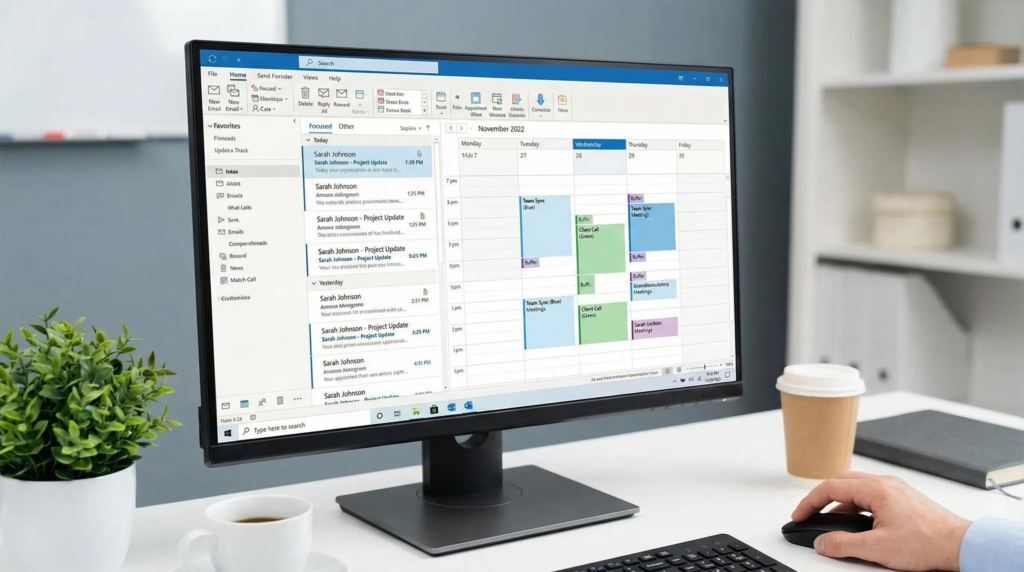
Professional Email Examples
Example 1: Meeting
Dear Sarah,
If your schedule permits, I would appreciate a few minutes to discuss the updated proposal during our meeting.
Kind regards,
Daniel
Example 2: Reviewing a Document
Hi James,
If you have time, could you take a quick look at the attached document? Your feedback would be helpful.
Best,
Olivia
Example 3: Client Communication
Dear Mr. Wilson,
If convenient, I would be happy to arrange a brief call to discuss the next steps.
Please let me know what time works best for you.
Kind regards,
Michael
Example 4: Team Task
Please review the remaining files when time allows and let me know if you identify any issues.
Example 5: Meeting Agenda
We will cover the main agenda items first. Should time allow, we can then discuss the additional questions raised by the team.
Which Alternative Is Most Professional?
There is no single best replacement for every situation.
For a formal email, “if your schedule permits” or “when your schedule allows” works well.
For a friendly workplace message, “if you have time” sounds more natural.
For a meeting or schedule, “if you have availability” is specific and useful.
For a general request, “if convenient” provides a polite and flexible tone.
For formal correspondence, “should time allow” is appropriate, although it is more formal than most everyday workplace writing requires.
“If Time Permits” vs. “If Time Allows”
These expressions have essentially the same meaning.
We can discuss the issue if time permits.
and:
We can discuss the issue if time allows.
Both communicate that the discussion will happen only if sufficient time is available.
“If time allows” tends to sound slightly more conversational, while “if time permits” can feel more formal.
“If Time Permits” vs. “If Convenient”
These expressions are not exactly interchangeable.
“If time permits” focuses specifically on whether enough time is available.
“If convenient” is broader and focuses on whether the request fits comfortably into the person’s circumstances or schedule.
For example:
If time permits, we can review the report.
focuses on available time.
If convenient, we can review the report tomorrow.
focuses more broadly on whether tomorrow works for the recipient.
Is “If Time Permits” Professional?
Yes. “If time permits” is professional and grammatically correct.
It is especially suitable for formal writing, meeting agendas, business correspondence, and situations where you want to indicate that something is secondary.
However, it may sound more formal than necessary in a quick email or workplace chat. In those situations, “if you have time” or “if time allows” may feel more natural.
Common Mistakes to Avoid
Making a Simple Request Too Formal
Instead of:
Should time allow, I would appreciate your consideration of the attached document.
A colleague may prefer:
If you have time, could you review the attached document?
Making “If Time Permits” Sound Like an Obligation
The phrase usually communicates flexibility. If you need a task completed by a specific deadline, state the deadline clearly.
Using the Phrase When Scheduling
If you are specifically asking about someone’s availability, “if you have availability” or “when your schedule allows” may be clearer.
Overusing Formal Expressions
Professional writing does not always need formal vocabulary. Choose wording that matches the relationship and purpose of the message.
Quick Comparison
| Phrase | Formality | Best Use | Tone |
|---|---|---|---|
| If time permits | Medium-high | Formal requests | Polite |
| If time allows | Medium | General workplace writing | Natural |
| If your schedule permits | High | Formal emails | Respectful |
| If you have time | Low-medium | Colleagues | Friendly |
| When time allows | Medium | Flexible tasks | Professional |
| If convenient | Medium | Requests | Polite |
| When your schedule allows | Medium-high | Meetings and emails | Professional |
| If you have availability | Medium-high | Scheduling | Direct |
| As time allows | Medium | Ongoing tasks | Professional |
| Should time allow | High | Formal correspondence | Formal |
Frequently Asked Questions
What is another way to say “if time permits”?
You can say “if time allows,” “if your schedule permits,” “if you have time,” “when time allows,” or “if convenient.” The best option depends on how formal your communication needs to be.
What is a more professional way to say “if you have time”?
You can use “if your schedule permits” or “when your schedule allows.” These phrases sound more polished while still making it clear that the request is flexible.
Is “if time permits” formal?
Yes, “if time permits” has a moderately formal tone. It is appropriate in professional emails, reports, meeting agendas, and business correspondence. In casual workplace messages, “if time allows” may sound more natural.
Is “if time allows” better than “if time permits”?
Neither is universally better. They have essentially the same meaning, but “if time allows” can sound slightly more conversational. Choose based on the tone of the surrounding message.
How do you use “if time permits” in an email?
You can write, “If time permits, I would appreciate the opportunity to discuss this matter during our meeting.” This communicates that the discussion is welcome but not intended to take priority over more important agenda items.
What can I say instead of “if time permits” in a meeting?
You can say “if time allows,” “if we have time,” or “should time allow.” For a natural meeting style, “if we have time” is often the simplest option.
Conclusion
Knowing another way to say if time permits can help you adjust your workplace communication to the right level of formality. “If time allows” is a natural everyday alternative, while “if your schedule permits” works well in formal emails.
For scheduling, consider “if you have availability.” For a polite request, “if convenient” is useful. And when writing highly formal correspondence, “should time allow” can provide a more traditional tone.
Read More: How to Say If Time Permits Professionally: 7 Powerful Way
Usage Tips
- Use “if time allows” for natural workplace communication.
- Use “if your schedule permits” for formal emails.
- Use “if you have time” with familiar colleagues.
- Use “if convenient” when making a flexible request.
Common Mistakes
- Do not make simple workplace messages unnecessarily formal.
- Do not use “if time permits” when you actually need a firm deadline.
- Use “if you have availability” when specifically discussing schedules.
- Match the phrase to your relationship with the recipient.
When to Use It
Use “if time permits” when an activity is optional, secondary, or dependent on having enough available time.
When to Avoid It
Avoid it when the task is mandatory or has a firm deadline. In those situations, clearly state what needs to be done and when it is due.