

Have you ever received a message containing “PYO” and wondered what it means? You’re not alone. Internet slang changes quickly, and abbreviations like PYO often leave people confused because they can have more than one meaning depending on the conversation.
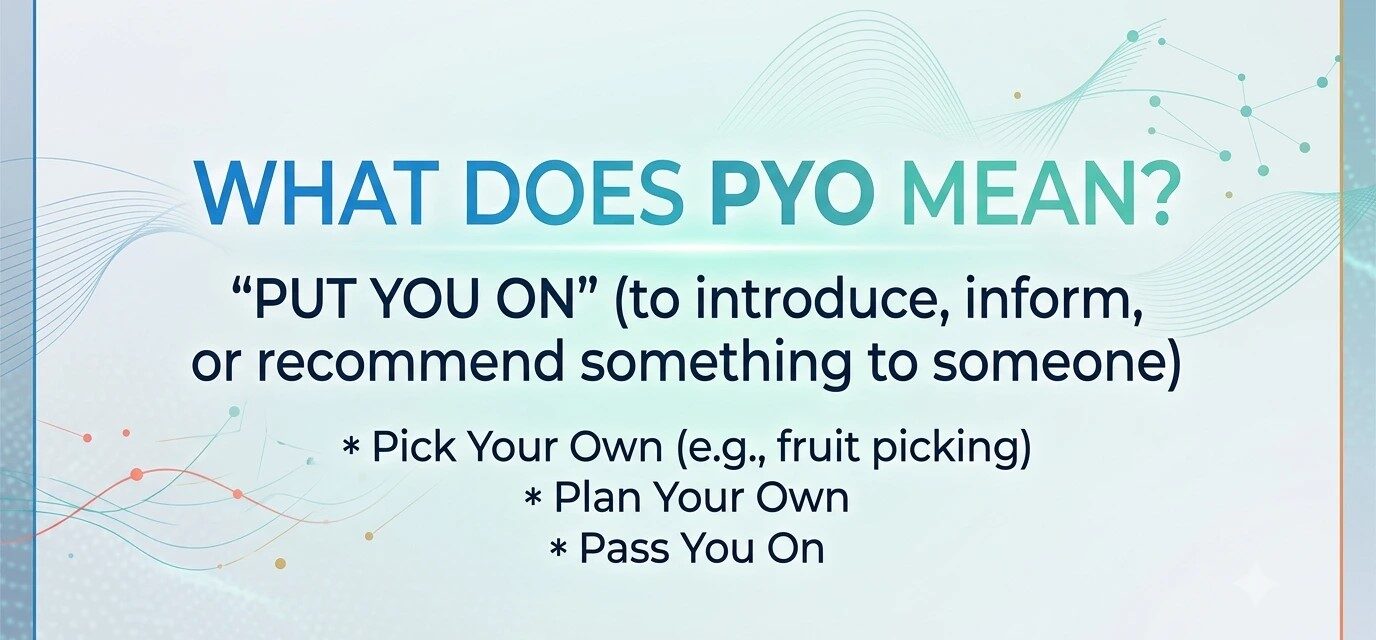
In most online conversations, PYO commonly stands for “Put You On.” It is used when someone recommends something, introduces another person to an opportunity, or helps someone discover something valuable. You might see it in text messages, TikTok comments, Instagram DMs, Snapchat chats, X (formerly Twitter), or even YouTube discussions.
For example, if a friend shares a great restaurant with you, they might say, “I’m trying to PYO to this place.” In this context, they mean they’re introducing you to something they think you’ll enjoy.
However, PYO doesn’t always mean the same thing. In certain communities or industries, it may have different interpretations. That’s why understanding the context is essential before assuming its meaning.
In this guide, you’ll learn what PYO means in texting, where it came from, how it’s used on different social media platforms, real-life conversation examples, emotional meanings, and much more.
PYO Meaning – Quick Definition
What Does PYO Mean in Text?
The most common meaning of PYO is:
PYO = Put You On
The phrase means:
- Introduce someone to something new
- Recommend something valuable
- Help someone discover a product, song, movie, restaurant, or opportunity
- Share useful information
Rather than saying, “Let me introduce you to this,” many people simply say, “Let me PYO.”
Quick Examples
“Let me PYO to this new Netflix series.”
“My cousin PYO to this amazing coffee shop.”
“Can someone PYO to a good study app?”
“Thanks for PYO to that artist!”
In each example, PYO means introducing someone to something they might enjoy or benefit from.
Quick Facts
- Full Form: Put You On
- Tone: Friendly, helpful, conversational
- Common Platforms: TikTok, Snapchat, Instagram, X, WhatsApp, Discord
- Popular Among: Gen Z, Millennials, online creators, music lovers
Other Possible Meanings of PYO
Although Put You On is the most popular meaning, PYO may occasionally represent something different depending on the context.
PYO as “Pick Your Own”
Businesses, especially farms and tourist attractions, sometimes use PYO to mean:
Pick Your Own
Example:
“PYO strawberries this weekend.”
Here, visitors are invited to pick fruits or vegetables themselves.
PYO in Business or Organizations
Some companies or internal systems may use PYO as an abbreviation for project names or technical terms.
These meanings are usually specific to a workplace or industry and are much less common than “Put You On.”
Origin & Background
Where Did PYO Come From?
The phrase “Put You On” has existed in spoken English for many years, particularly in African American Vernacular English (AAVE). It originally meant introducing someone to useful information, influential people, or valuable opportunities.
Over time, the phrase became popular in music culture, especially within hip-hop communities.
Artists frequently used expressions like:
“I’m trying to put you on.”
meaning:
“I want to show you something worth knowing.”
Eventually, social media shortened the phrase into the abbreviation PYO, making it easier to type in fast-moving online conversations.
Growth Through Social Media
As TikTok, Instagram Reels, YouTube Shorts, and X gained popularity, users increasingly shared recommendations.
Examples included:
- Songs
- Clothing brands
- Restaurants
- Mobile apps
- Books
- Podcasts
- TV shows
Instead of writing:
“I’d like to recommend this.”
people simply wrote:
“PYO.”
Why It Became Popular
PYO fits perfectly with recommendation culture.
People love sharing things they enjoy, and PYO quickly communicates:
“I think you’ll like this.”
PYO on Different Platforms
PYO on TikTok
TikTok creators often use PYO when recommending products, music, or creators.
Examples:
“PYO to this underrated singer.”
“PYO to the best skincare routine.”
“PYO to these hidden travel spots.”
PYO on Instagram
Instagram users frequently use PYO in captions and direct messages.
Example:
“My best friend PYO to this café.”
It tells followers someone introduced them to something enjoyable.
PYO on Snapchat
On Snapchat, friends use PYO during casual conversations.
Example:
“PYO to this playlist.”
This simply means:
“I’m recommending this playlist.”
PYO on X (Twitter)
Short-form platforms encourage abbreviations.
Example:
“If nobody has PYO to this movie yet, watch it tonight.”
The message encourages others to discover something worthwhile.
Real-Life Conversations
WhatsApp Chat
Person A:
Can you PYO to a good gym?
Person B:
Absolutely! I’ll send you the location.
TikTok Comments
Person A:
PYO to more artists like this.
Creator:
You’ll definitely love these recommendations.
Instagram DM
Person A:
My brother PYO to this amazing pizza place.
Person B:
Looks delicious! I’m going there this weekend.
Snapchat Conversation
Person A:
PYO to this podcast.
Person B:
Listening now. It’s really good!
Text Message
Person A:
Thanks for PYO to that app.
Person B:
Glad you liked it.
Emotional & Psychological Meaning
Sharing Something Valuable
PYO reflects generosity.
When someone says:
“Let me PYO.”
they’re offering knowledge, experience, or recommendations that they believe will help someone else.
Building Connections
People naturally enjoy sharing discoveries.
Whether it’s music, books, restaurants, or useful apps, introducing someone to something meaningful strengthens relationships.
Creating Trust
Recommendations often come from people we trust.
When a friend says:
“Let me PYO to this restaurant.”
we’re more likely to try it because we value their opinion.
Supporting Others
PYO isn’t only about entertainment.
People also use it when introducing others to:
- Career opportunities
- Scholarships
- Educational resources
- Fitness routines
- Financial advice
Personal-Style Scenario
Imagine you’re searching for a reliable language-learning app. After trying several disappointing options, a friend messages:
“Let me PYO to this app. It helped me improve my English.”
Instead of spending hours searching online, you receive a recommendation from someone whose experience you trust. That’s why PYO has become such a popular expression—it represents sharing something genuinely helpful.
Usage in Different Contexts
The meaning of PYO depends on the conversation and the relationship between the people communicating. While it most commonly means “Put You On,” the way it is used can vary across social media platforms, friendships, workplaces, and everyday conversations.
Social Media
PYO is especially popular on platforms where people frequently recommend products, music, videos, restaurants, and trends.
For example, a TikTok creator might post:
“PYO to the best budget headphones.”
This tells viewers that the creator is introducing them to a product they believe is worth trying.
On Instagram, someone may share:
“My cousin PYO to this hidden beach.”
The phrase lets followers know that the location was recommended by someone else.
Friends and Relationships
Among friends, PYO is commonly used when sharing something exciting or useful.
Examples:
- “Let me PYO to this new coffee shop.”
- “I’ll PYO to my favorite study playlist.”
- “My sister PYO to this skincare brand.”
Using PYO creates a friendly tone because it shows the speaker wants to help someone discover something valuable.
Music and Entertainment
One of the most popular uses of PYO is in music culture.
People often recommend:
- New songs
- Albums
- Artists
- Podcasts
- Movies
- TV series
Example:
“If nobody has PYO to this artist yet, you’re missing out.”
The phrase encourages others to explore something they may not know about.
Education and Learning
Students also use PYO when recommending educational resources.
Examples:
- “Can someone PYO to a good math channel?”
- “My teacher PYO to this free learning website.”
- “My friend PYO to a useful exam preparation app.”
Here, PYO means introducing someone to helpful learning tools.
Work and Professional Settings
PYO can also appear in informal workplace conversations.
Example:
“My manager PYO to a networking event.”
or
“A colleague PYO to this productivity tool.”
However, in formal business writing, it is usually better to use complete phrases such as:
- Recommend
- Introduce
- Suggest
Instead of writing:
“I’ll PYO to this software.”
A professional version would be:
“I’d like to recommend this software.”
When NOT to Use PYO
Although PYO is widely understood among younger internet users, there are situations where it may not be appropriate.
Formal Emails
Avoid using internet slang in professional emails.
Instead of:
“I’ll PYO to this report.”
Write:
“I’d like to recommend this report.”
Academic Writing
Research papers, essays, and school assignments should always use complete language.
Instead of writing PYO, use words like:
- Recommend
- Introduce
- Suggest
Talking to People Unfamiliar With Slang
Older family members or people who rarely use social media may not understand what PYO means.
Using full sentences helps avoid confusion.
Official Presentations
Business presentations and public speeches should avoid internet abbreviations unless the audience already understands them.
Professional language creates a stronger impression.
Common Misunderstandings
Thinking PYO Means Only One Thing
Although Put You On is the most common meaning, PYO can also stand for Pick Your Own in farming, tourism, and local businesses.
Always consider the topic before deciding what it means.
Confusing PYO With Promotion
Some people assume PYO always means advertising.
In reality, PYO usually refers to a genuine recommendation rather than paid promotion.
A friend saying:
“Let me PYO to this café.”
is simply sharing a personal suggestion.
Assuming It Is Always About Products
PYO can refer to almost anything valuable, including:
- Music
- Books
- Jobs
- Scholarships
- Podcasts
- Websites
- Restaurants
- Opportunities
Believing Everyone Understands It
Although PYO is growing in popularity, many people outside social media communities may never have seen it before.
Using the full phrase is often clearer when speaking with a broader audience.
Comparison Table
| Expression | Meaning | Common Use |
|---|---|---|
| PYO | Put You On | Recommend or introduce something |
| FYI | For Your Information | Share useful information |
| IMO | In My Opinion | Express a personal opinion |
| TBH | To Be Honest | Give an honest opinion |
| PSA | Public Service Announcement | Share important information |
| GOAT | Greatest of All Time | Praise someone or something |
| FYP | For You Page | TikTok recommendation feed |
| DM | Direct Message | Private conversation |
| IRL | In Real Life | Offline experiences |
| ICYMI | In Case You Missed It | Share something others may have missed |
Key Insight
Unlike abbreviations such as FYI or IMO, which focus on sharing information or opinions, PYO is centered on introducing someone to something valuable. It often reflects trust, generosity, and the desire to help others discover useful resources or enjoyable experiences.
Variations and Related Expressions
1. Put You On
The complete phrase behind PYO.
Example:
“Let me put you on this new artist.”
2. Recommend
A formal alternative suitable for professional situations.
3. Suggest
A polite way to introduce an idea or resource.
4. Check This Out
A casual invitation to look at something interesting.
5. You Should Try
A common phrase used when recommending products or experiences.
6. Put Me On
A request asking someone to recommend something.
Example:
“Can you put me on to a good podcast?”
7. Plug Me In
A slang expression asking someone to connect you with an opportunity or useful contact.
8. Hook Me Up
Often used when asking someone to recommend or provide access to something.
9. Show Me
A simple alternative that asks someone to introduce you to something new.
10. Introduce Me To
A complete phrase commonly used in professional and everyday conversations.
How to Respond When Someone Uses PYO
Your response depends on the recommendation being shared.
Casual Replies
- Thanks for putting me on!
- I’ll check it out.
- That looks interesting.
- Appreciate the recommendation.
Excited Replies
- This is exactly what I needed!
- You’re the best!
- Can’t wait to try it.
- Adding it to my list right now.
Funny Replies
- Why didn’t you PYO sooner? 😂
- You’re influencing me again!
- My wallet won’t forgive you. 😄
- Looks like I’m staying up all night watching this.
Respectful Replies
- Thank you for sharing this.
- I appreciate the recommendation.
- I’ll definitely give it a try.
- Thanks for thinking of me.
Regional & Cultural Usage
Western Culture
PYO is commonly used among younger generations, particularly in online communities focused on music, fashion, entertainment, and social media.
Asian Culture
English internet slang continues to grow in popularity among students and young professionals. PYO is mostly seen in online discussions rather than everyday speech.
Middle Eastern Culture
Among English-speaking social media users, PYO is becoming more familiar, especially through TikTok, Instagram, and YouTube.
Global Internet Usage
As social media connects users from around the world, expressions like PYO spread quickly across different cultures.
Although its popularity continues to grow, it remains more common among younger internet users.
Gen Z vs Millennials
Gen Z
Frequently uses PYO while sharing:
- Songs
- Fashion
- Apps
- Lifestyle tips
- Travel recommendations
Millennials
May understand the phrase but often prefer saying “recommend” or “introduce” in everyday conversations.
Is PYO Safe for Kids?
Yes. PYO is generally safe for children because it usually means “Put You On,” or introducing someone to something helpful or enjoyable.
Children may come across PYO while watching videos, reading comments, or chatting with friends online.
Parents should still encourage children to think critically about recommendations they receive online. Just because someone recommends a product, app, or website doesn’t always mean it’s trustworthy or suitable.
Teaching children to verify information and seek guidance before trying unfamiliar content is a good digital safety habit.
Frequently Asked Questions
What does PYO mean in texting?
In texting, PYO most commonly means “Put You On,” which means introducing or recommending something valuable to another person.
What does PYO mean on TikTok?
On TikTok, PYO is often used when creators recommend songs, products, books, restaurants, or other creators worth checking out.
Is PYO the same as recommending something?
Yes. In most conversations, PYO simply means introducing someone to something you think they’ll enjoy or benefit from.
What does PYO mean in music slang?
In music culture, PYO usually means recommending a song, album, or artist that someone may not have discovered yet.
Can PYO have other meanings?
Yes. Although “Put You On” is the most common meaning online, PYO can also mean “Pick Your Own” in farming and tourism contexts.
Should I use PYO in professional emails?
No. Professional communication should use complete words like recommend, introduce, or suggest instead of internet slang.
Why has PYO become so popular?
PYO reflects modern internet culture, where people enjoy sharing helpful recommendations, hidden gems, and useful resources with others in a quick and casual way.
Conclusion
PYO is one of the newest internet abbreviations that has become increasingly popular across TikTok, Instagram, Snapchat, WhatsApp, and other social media platforms. In most conversations, it stands for “Put You On,” meaning to introduce someone to something useful, entertaining, or valuable.
Whether you’re recommending a favorite song, a hidden restaurant, a study app, or a new opportunity, PYO is a quick way to let others know you’re sharing something worth exploring. As with any internet slang, context is important because PYO can have other meanings in specific industries or communities.
Now that you understand what PYO means, you’ll be able to recognize it in conversations, use it naturally when appropriate, and confidently respond when someone says they’re going to “PYO” to something great.