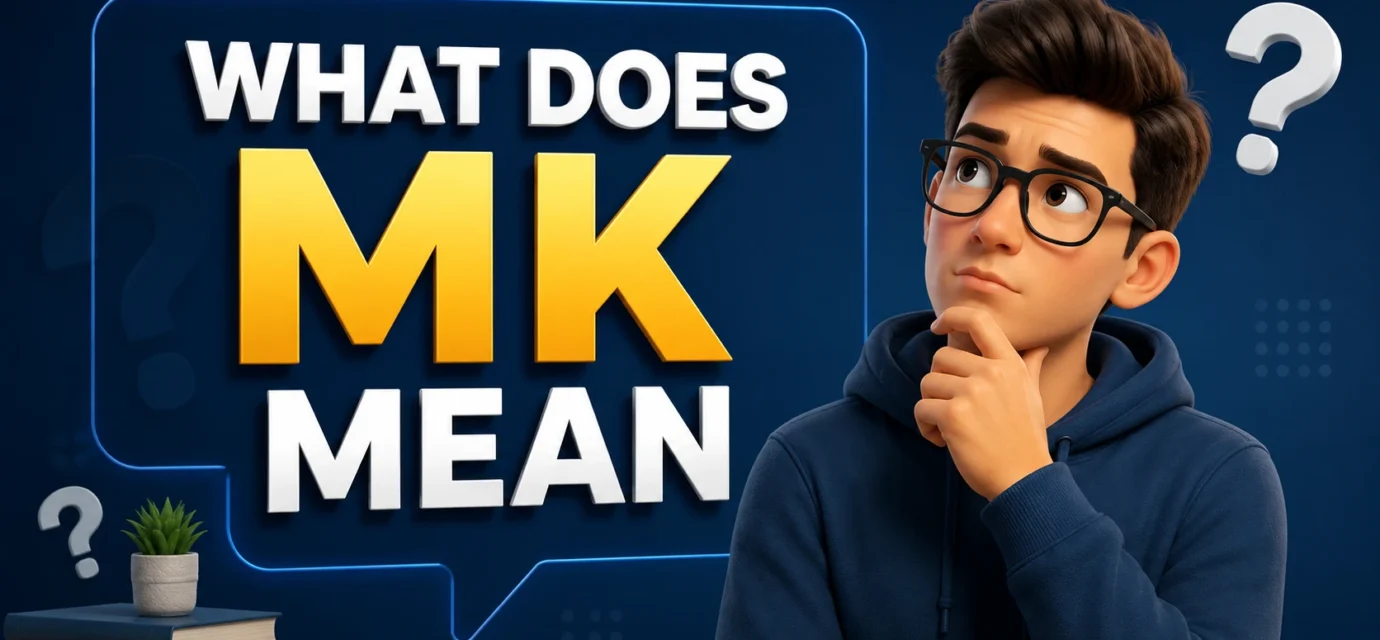

Have you ever received a message that simply says “MK” and wondered what the person actually meant? Short texting abbreviations can make digital conversations faster, but they can also be confusing when you do not know the expression behind them.
In most texting and social media conversations, MK means “Okay.” It is generally a casual shortened form of “OK” or “Okay.” Depending on the situation, it can communicate agreement, acknowledgment, acceptance, or simply that someone has received your message.
For example:
Person A:
I’ll call you after dinner.
Person B:
MK.
Here, MK simply means “Okay.”
However, the tone can change depending on punctuation, capitalization, and the relationship between the people communicating. A friendly “mk 😊” may feel relaxed, while a short “mk.” can sometimes sound annoyed, dismissive, or uninterested.
MK can also have other meanings in specific contexts. In some conversations, it may refer to a person’s initials, a place, a brand, or a technical abbreviation. Context is therefore essential when interpreting it.
This guide explains what MK means in texting, how it is used on WhatsApp, Snapchat, TikTok, and Instagram, its emotional meaning, common misunderstandings, appropriate replies, and situations where you should avoid using it.
MK Meaning – Quick Definition
What Does MK Mean in Text?
The most common meaning of MK in texting is:
MK = Okay
It is a casual way of acknowledging what someone has said.
Depending on the context, it can mean:
- Okay
- Alright
- Got it
- Sure
- I understand
- Fine
For example:
“Meet me outside at 7.”
“MK.”
The response means, “Okay, I understand.”
Quick Examples
“MK, I’ll be there.”
“You need to finish this today.”
“MK, got it.”
“MK 😊 see you later.”
The exact emotional tone depends on the conversation.
Quick Facts
- Common Meaning: Okay
- Tone: Casual and informal
- Used On: WhatsApp, Snapchat, Instagram, TikTok, SMS
- Common Among: Younger internet users and casual texters
- Possible Tone: Friendly, neutral, or occasionally dismissive
What Does MK Mean Depending on Tone?
One interesting thing about MK is that the same two letters can communicate different feelings.
Friendly MK
“MK 😊”
This usually feels warm and relaxed.
Neutral MK
“MK, I’ll do it.”
This simply acknowledges the message.
Short MK
“MK”
This may sound slightly distant, depending on the conversation.
MK.
Adding a period can sometimes make the message feel more serious or abrupt.
For example:
Person A:
Are you still coming?
Person B:
MK.
The person may simply mean “Okay,” but the other person could interpret the reply as cold.
Other Possible Meanings of MK
Although “Okay” is a common texting meaning, MK can represent other things in different contexts.
MK as Initials
MK may simply be someone’s initials.
For example:
“MK will join us later.”
Here, MK refers to a person rather than a texting abbreviation.
MK as a Place or Name
In some contexts, MK may refer to a location, organization, or abbreviation used locally.
The meaning depends entirely on the conversation.
MK in Professional or Technical Contexts
Some industries use MK as part of technical terminology, product names, project codes, or organizational abbreviations.
If you see MK in a formal document, do not automatically assume it means “Okay.” Look at the surrounding information first.
Origin & Background
Where Did MK Come From?
MK is essentially a shortened form of “Okay.”
Texting culture has always encouraged people to shorten common words and phrases. People use abbreviations because they make conversations quicker and more convenient.
Similar examples include:
- K – Okay
- OK – Okay
- Okk – Okay
- KK – Okay
- Alr – Alright
- Yep – Yes
MK fits into this larger pattern of informal digital communication.
Why Do People Use MK?
The main reason is convenience.
Typing:
“Okay, I understand.”
takes more time than:
“MK.”
In fast conversations, people naturally choose shorter expressions.
Social Media Influence
Social media and messaging apps have made short responses extremely common.
People communicate through:
- Text messages
- Snapchat
- Instagram DMs
- TikTok comments
- Gaming chats
These environments encourage quick replies, making expressions like MK easy to adopt.
MK on Different Platforms
MK on WhatsApp
WhatsApp users may send MK as a quick acknowledgment.
Example:
Person A:
I’ll send you the documents tonight.
Person B:
MK, thanks.
The response simply confirms that the message has been understood.
MK on Snapchat
Snapchat conversations are usually quick and informal.
Example:
Person A:
Don’t forget to bring your charger.
Person B:
MK 😂
Here, MK means “Okay.”
MK on Instagram
Instagram users may use MK in DMs when responding to plans or suggestions.
Example:
Person A:
Let’s meet at the mall at 5.
Person B:
MK, see you there.
MK on TikTok
TikTok comments are often short, so MK can appear as a quick reaction.
Example:
Person A:
This trend is actually fun.
Person B:
MK, I’m trying it 😂
MK in Gaming Chats
Players may use MK when acknowledging instructions.
Example:
Player A:
Wait here until the next round.
Player B:
MK.
It saves time during fast-paced gameplay.
Real-Life Conversations
WhatsApp Conversation
Person A:
Please remember to bring the documents tomorrow.
Person B:
MK, I won’t forget.
Snapchat Conversation
Person A:
We’re leaving at 8.
Person B:
MK 👍
Person A:
See you then.
Instagram DM
Person A:
I’ll send you the address later.
Person B:
MK, thank you!
Text Message
Person A:
Don’t tell anyone about the surprise.
Person B:
MK, I won’t.
Casual Friend Conversation
Person A:
Can you pick me up at 6?
Person B:
MK.
Person A:
Thanks!
Emotional & Psychological Meaning
Acknowledgment
The most basic purpose of MK is acknowledgment.
It tells the other person:
“I received your message and understand.”
Agreement
MK can also show agreement.
Example:
Friend A:
Let’s watch a movie tonight.
Friend B:
MK, sounds good.
Here, MK communicates acceptance.
Emotional Distance
Sometimes a very short response can feel emotionally distant.
Compare:
“Okayyy! 😊”
with:
“MK.”
The first feels enthusiastic, while the second may feel more reserved.
That does not necessarily mean the person is angry. Text messages lack voice tone and facial expressions, so short replies can easily be misunderstood.
Avoiding Unnecessary Conversation
Some people use MK because they simply do not have anything else to add.
For example:
Person A:
I’ll see you tomorrow.
Person B:
MK.
There may be no hidden emotion at all.
Personal-Style Scenario
Imagine you send your friend a detailed message about your plans:
“I’m going to the market after work, then I’ll come to your house around 7.”
Your friend replies:
“MK.”
You might initially wonder whether they are annoyed. In reality, they may simply be acknowledging your plan.
This is a good example of why digital communication should not always be interpreted emotionally. Context matters more than a two-letter reply.
Usage in Different Contexts
The meaning of MK is usually simple, but its tone can change depending on the situation. Someone may use it to show agreement, acknowledge information, confirm plans, or end a conversation.
Social Media
On social media, MK is often used as a quick reaction.
For example:
“MK, I’ll check it out.”
The person is acknowledging the recommendation without adding much detail.
In comments, MK can also be used casually:
“MK 😂 I get your point.”
Friends and Relationships
Friends commonly use MK when confirming plans.
Person A:
I’ll pick you up at 6.
Person B:
MK, see you then.
In close relationships, MK can be completely neutral. However, if someone normally sends long, enthusiastic replies and suddenly responds with only “MK,” the change may feel noticeable.
Family Conversations
Family members may use MK when acknowledging instructions.
Parent:
Please call me when you reach home.
Child:
MK.
Here, it simply means “Okay.”
School and College Chats
Students may use MK in group chats when confirming information.
Student A:
The assignment is due Friday.
Student B:
MK, thanks for letting me know.
It is casual but understandable.
Gaming and Online Communities
In gaming chats, MK can be useful because players often need quick responses.
Player A:
Wait here until I come back.
Player B:
MK.
The short response saves time while confirming the instruction.
Work and Professional Settings
MK is generally too informal for formal business communication.
Instead of:
“MK, I’ll send it tomorrow.”
A more professional response would be:
“Okay, I’ll send it tomorrow.”
Or:
“Understood. I’ll send it tomorrow.”
Using complete words is safer when communicating with clients, managers, teachers, or people you do not know well.
When NOT to Use MK
Formal Emails
Avoid MK in:
- Job applications
- Business emails
- Official letters
- Client communication
- Academic correspondence
A professional response should be clear and complete.
Academic Assignments
MK should not appear in essays, reports, research papers, or formal assignments unless you are specifically discussing texting language.
Serious Conversations
A short “MK” can sometimes appear dismissive when someone is discussing an emotional or important issue.
For example:
Person A:
I feel like you’ve been ignoring me lately.
Person B:
MK.
This could make the other person feel unheard.
A better response would be:
“I understand. Let’s talk about it.”
When You Need to Show Empathy
If someone shares difficult news, simply replying “MK” may sound insensitive.
Instead, acknowledge their feelings and respond thoughtfully.
Common Misunderstandings
Is MK Rude?
Not necessarily.
MK can be completely friendly or neutral. However, because it is short, some people may interpret it as cold.
The surrounding conversation matters.
Does MK Mean “Mad, Okay”?
No. In normal texting, MK generally means “Okay.”
Some people may jokingly invent alternative meanings, but these are not the standard interpretation.
Is MK the Same as K?
They are similar, but they can feel different.
“K” is often perceived as more abrupt.
“MK” can feel slightly softer because it resembles the sound of “mm-kay” or “okay.”
Does a Period Make MK Rude?
Not automatically.
“MK.” may sound more serious or final than “MK 😊,” but punctuation alone cannot determine someone’s emotion.
Can MK Mean Something Other Than Okay?
Yes. In a different context, MK may be initials, a location abbreviation, a product code, or a technical term.
Context determines the meaning.
Comparison Table
| Expression | Meaning | Typical Tone |
|---|---|---|
| MK | Okay | Casual |
| OK | Okay | Neutral |
| K | Okay | Very brief |
| KK | Okay | Friendly/casual |
| Okk | Okay | Casual/playful |
| Okay | Agreement or acknowledgment | Neutral |
| Alr | Alright | Casual |
| Sure | Agreement | Friendly/neutral |
| Got it | I understand | Clear |
| Sounds good | Agreement | Positive |
Key Insight
Although MK and OK generally communicate the same basic message, MK can feel more conversational and informal. The safest choice depends on your relationship with the person and the seriousness of the conversation.
Variations and Related Expressions
1. OK
The standard abbreviation for “Okay.”
Example:
“OK, I’ll be there.”
2. K
An extremely short form of “Okay.”
Example:
“K, see you later.”
Because it is so short, it can sometimes feel cold.
3. KK
A friendly texting form of “Okay.”
Example:
“KK, no problem.”
4. Okk
A playful or informal spelling of “Okay.”
Example:
“Okk, I’ll wait.”
5. Okay
The complete form and one of the safest choices in most situations.
6. Alright
A casual alternative to “Okay.”
Example:
“Alright, I’ll do it.”
7. Got It
Clearly communicates understanding.
Example:
“Got it, thanks.”
8. Sure
Shows agreement or willingness.
Example:
“Sure, I’ll help.”
9. Sounds Good
A positive way to accept a suggestion or plan.
Example:
“Sounds good! See you tomorrow.”
10. Understood
A more formal way of acknowledging information.
Example:
“Understood. I’ll complete the task today.”
How to Respond When Someone Uses MK
Your response depends on whether the conversation needs to continue.
Casual Replies
If someone says “MK,” you may not need to respond at all.
If you want to continue:
- “Great!”
- “Thanks!”
- “See you then.”
- “Perfect.”
Funny Replies
Among close friends, you might respond playfully:
- “That’s it? 😂”
- “Very detailed response 😂”
- “MK then!”
- “I hear you 😄”
Mature Replies
For a calm and respectful conversation:
- “Great, thank you.”
- “I appreciate it.”
- “Perfect, see you then.”
- “Thanks for confirming.”
If You Think They Are Upset
Do not immediately assume something is wrong.
You can ask:
“Everything okay?”
or:
“You seem quiet. Is everything alright?”
This is better than making assumptions based on a two-letter message.
Regional & Cultural Usage
Western Culture
MK is mostly used in casual digital communication among English-speaking internet users.
It is especially common in texting and social media conversations.
Asian Culture
English abbreviations are widely used by younger people communicating online. MK may appear in chats with friends, classmates, and international contacts.
Middle Eastern Culture
Young English-speaking social media users may also use MK in casual digital conversations.
However, local language and culture strongly influence how frequently English abbreviations are used.
Global Internet Usage
Because messaging apps connect people worldwide, short forms such as MK can cross cultural boundaries quickly.
Even when people speak different first languages, commonly used English texting abbreviations may still appear in online conversations.
Gen Z vs Millennials
Gen Z may use MK alongside newer slang and emojis:
“MK 😂”
“MKkk”
Millennials may recognize MK but are often more likely to write:
“Okay”
or:
“Sure.”
Usage depends more on personal texting habits than age alone.
Is MK Safe for Kids?
Yes. MK is generally harmless texting slang because it usually means “Okay.”
Children may encounter it in:
- School group chats
- Text messages
- Gaming communities
- Social media
- Conversations with friends
There is no inherently inappropriate meaning in the standard use of MK.
Parents can still teach children that online abbreviations are informal and that professional or school communication may require complete words.
Frequently Asked Questions
What does MK mean in texting?
MK usually means “Okay.” It is a casual way to acknowledge a message, confirm information, or agree with something.
What does MK mean on Snapchat?
On Snapchat, MK usually means “Okay” and is used as a quick, informal response.
Is MK rude in texting?
MK is not automatically rude. Its tone depends on the conversation, punctuation, relationship, and circumstances.
What is the difference between MK and K?
Both can mean “Okay,” but K is often perceived as more abrupt, while MK may sound slightly more conversational.
What does MK mean from a girl?
If a girl sends “MK,” it normally means “Okay.” It does not automatically indicate anger, disinterest, or romantic interest.
What does MK mean from a guy?
The meaning is generally the same: “Okay.” The person’s gender does not change the standard texting meaning.
Can MK have another meaning?
Yes. In non-texting contexts, MK may represent initials, organizations, locations, technical terms, or other abbreviations.
Conclusion
So, what does MK mean? In most texting and social media conversations, MK means “Okay.” It is a short, informal way to acknowledge information, accept a suggestion, confirm a plan, or show that you understand.
You may see MK on WhatsApp, Snapchat, Instagram, TikTok, gaming chats, and ordinary text messages. Its tone can be friendly, neutral, or occasionally dismissive depending on the context.
The important thing is not to overthink a short reply. If someone normally uses MK casually, it may mean nothing more than “Okay.” If the conversation is emotional or serious, however, a longer response may be more appropriate.
Understanding small expressions like MK can make digital conversations easier to interpret. Once you recognize the context and tone, this simple abbreviation becomes straightforward.